
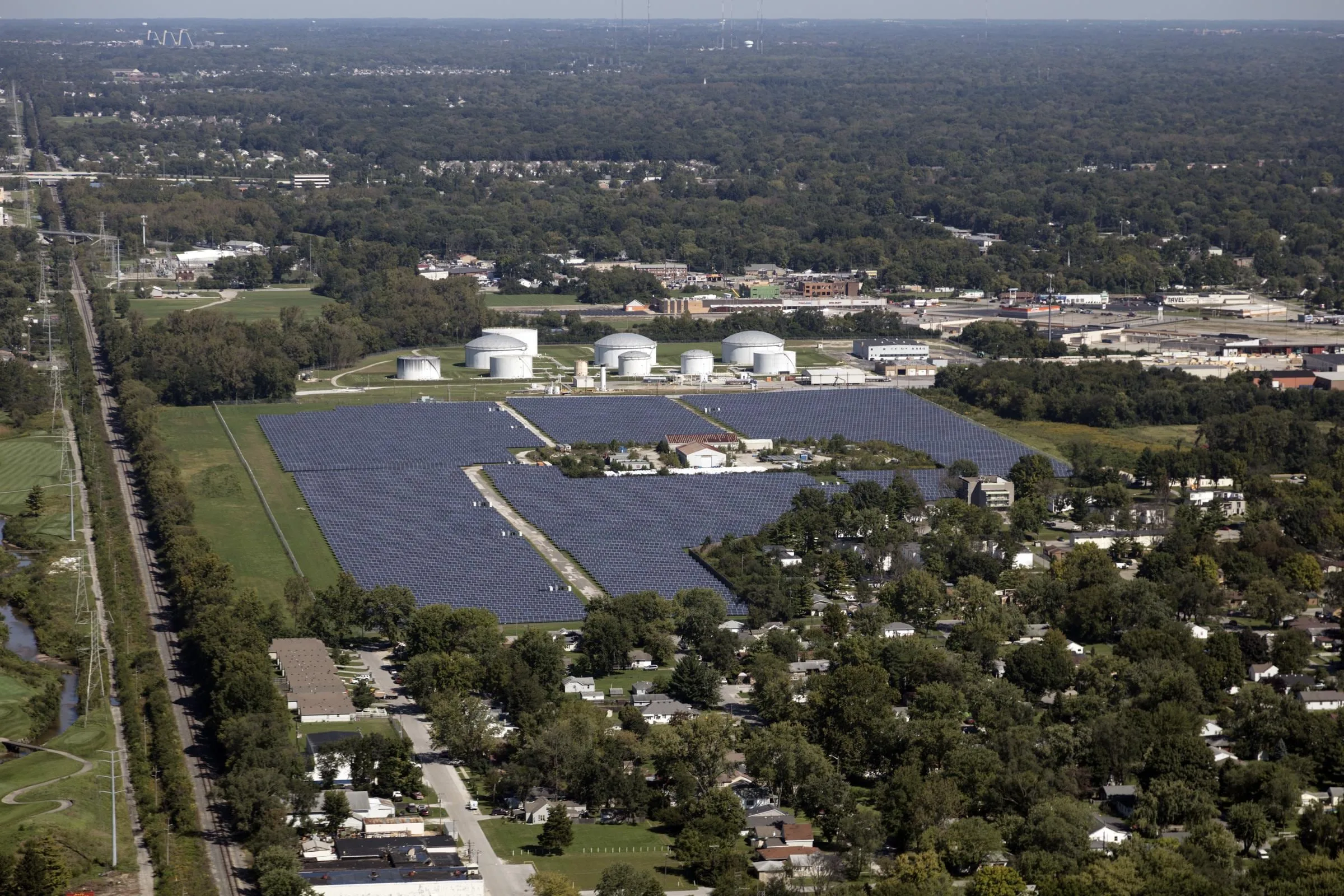
Renewable Energy & Infrastructure
BRE: A $380M Project-Finance Package for a 932 MW Solar Project
BRE — utility-scale solar sponsor
- senior secured financing, non-recourse to the sponsor
- $380M
- utility-scale solar capacity, fully permitted
- 932 MW
- 25-year unlevered project IRR
- ~24%
- DSCR across the 10-year loan tenor (avg 1.67x)
- 1.46–1.89x
Situation
BRE is the sponsor of a ready-to-build, 932 MW utility-scale solar project — fully permitted, with its Installation License in hand and 100% of output contracted under two long-term power-purchase agreements. What it needed was $380M of senior project finance from lenders who require a bankable, non-recourse structure — debt repaid entirely from the project’s own cash flows, with no sponsor guarantee behind it.
That is a specific and demanding underwriting bar. A lender isn’t buying the sponsor’s balance sheet; they’re buying the confidence that the plant will generate enough contracted cash, every year, to service the loan with margin to spare — in a market with real transmission and curtailment risk. The engagement’s job was to build the model that proves it.
The engagement
CMA built the business plan and the project-finance model behind the raise — an integrated, three-statement model designed to be stress-tested by a credit committee.
A conservative cash-flow engine
The model was built to be believed, which means built conservatively: 15% system losses, 0.5% annual degradation, seven usable sun-hours, and a $42/MWh PPA escalating 3% a year. On those assumptions, Year-1 revenue is $87.6M and EBITDA margins run above 90% and rise across the operating life — the kind of clean, contracted cash-flow profile that makes solar financeable.
Sizing the debt to the coverage
The core modeling move was to size a $380M, 7%, 10-year fully-amortizing facility — with construction-period interest capitalized — so that debt-service coverage never dips near the lender floor. Coverage opens at 1.46x in the first operating year and climbs to 1.89x by maturity (a 1.67x average), against a typical lender minimum of 1.20–1.30x. That headroom is the whole argument: the loan is covered, with room for a bad year.
The financing is also structured cleanly — the total capital need is $371M (EPC construction plus acquisition and development), and the $380M facility funds it with a surplus routed to the interest reserve, inside a ring-fenced, non-recourse holding structure.
Why the structure mattered
The discipline was to underwrite the way a lender does. A sponsor’s instinct is to show the upside case; a project-finance lender wants the downside covered — so the model leads with conservative generation assumptions, capitalizes construction interest correctly, sizes the debt to hold coverage above the floor across the full tenor, and rings the structure so risk can’t leak between entities. Doing that work up front is what turns a $380M ask into a $380M package a credit committee can actually clear.
Impact
BRE left with a lender-grade, non-recourse financing package: a conservative three-statement model showing 90%+ EBITDA margins, a DSCR of 1.46–1.89x comfortably above the lender minimum, a ~24% unlevered 25-year IRR, and over $283M of cumulative free cash flow by loan maturity — the evidence base behind the $380M request for a fully-permitted, fully-contracted 932 MW asset. (Figures are modeled projections from the project-finance model, not realized results.)
Non-recourse debt is underwritten on one thing: whether the project's own cash flows cover the loan, every year, under conservative assumptions. The model's job is to prove they do.
Engagement details are shared with client permission or presented in anonymized form. Results described are specific to the engagement and client circumstances shown and are not a guarantee of future outcomes. See our full disclaimer.
The Transformation
Before & after
Before
A ready-to-build asset needing $380M of non-recourse debt.
After
A three-statement model sizing debt to lender coverage standards.
Before
Repayment resting entirely on project cash flows.
After
A DSCR that holds 1.46–1.89x — comfortably above the lender floor.
Before
A complex multi-tier holding and tax structure to defend.
After
A ring-fenced structure and conservative assumptions, clearly modeled.
Before
A financing ask.
After
A lender-grade package: plan, model, coverage, and returns.
The Work, In Sequence
How the engagement ran
- 1
The cash-flow engine
A three-statement model on conservative assumptions — 15% losses, 0.5%/yr degradation, a $42/MWh PPA escalating 3%/yr — producing Year-1 revenue of $87.6M and 90%+ EBITDA margins across the operating life.
- 2
Sizing debt to coverage
A fully-amortizing $380M / 7% / 10-year facility with construction-period interest capitalization, sized so debt-service coverage stays comfortably above the 1.20–1.30x lender minimum — landing at 1.46x rising to 1.89x.
- 3
Structure & returns
A ring-fenced, non-recourse holding structure and a ~24% 25-year unlevered IRR with over $283M of cumulative free cash flow by loan maturity — the evidence base behind the $380M request.
Related engagements
Free Checklist
Are you raise-ready?
You've read the theory — now score yourself against the 12 things a lender or investor checks first. Free checklist, straight to your inbox.
- A three-statement model that holds up
- A DSCR and downside case lenders read
- An honestly sized market (TAM/SAM/SOM)
- A use of proceeds tied to milestones