
Retail & Franchising
Milly's: Turning a Beloved Women's Footwear Store into a Franchise System
Milly's — Rio Grande Valley, TX
- the franchise revenue model — wholesale margin, franchise fee & royalty
- 3 streams
- founder instinct converted into a documented operating system
- Franchise-ready
- prove → validate under a second operator → scale
- Phased gates
- of fashion-retail instinct, finally written down and transferable
- 15+ years
Situation
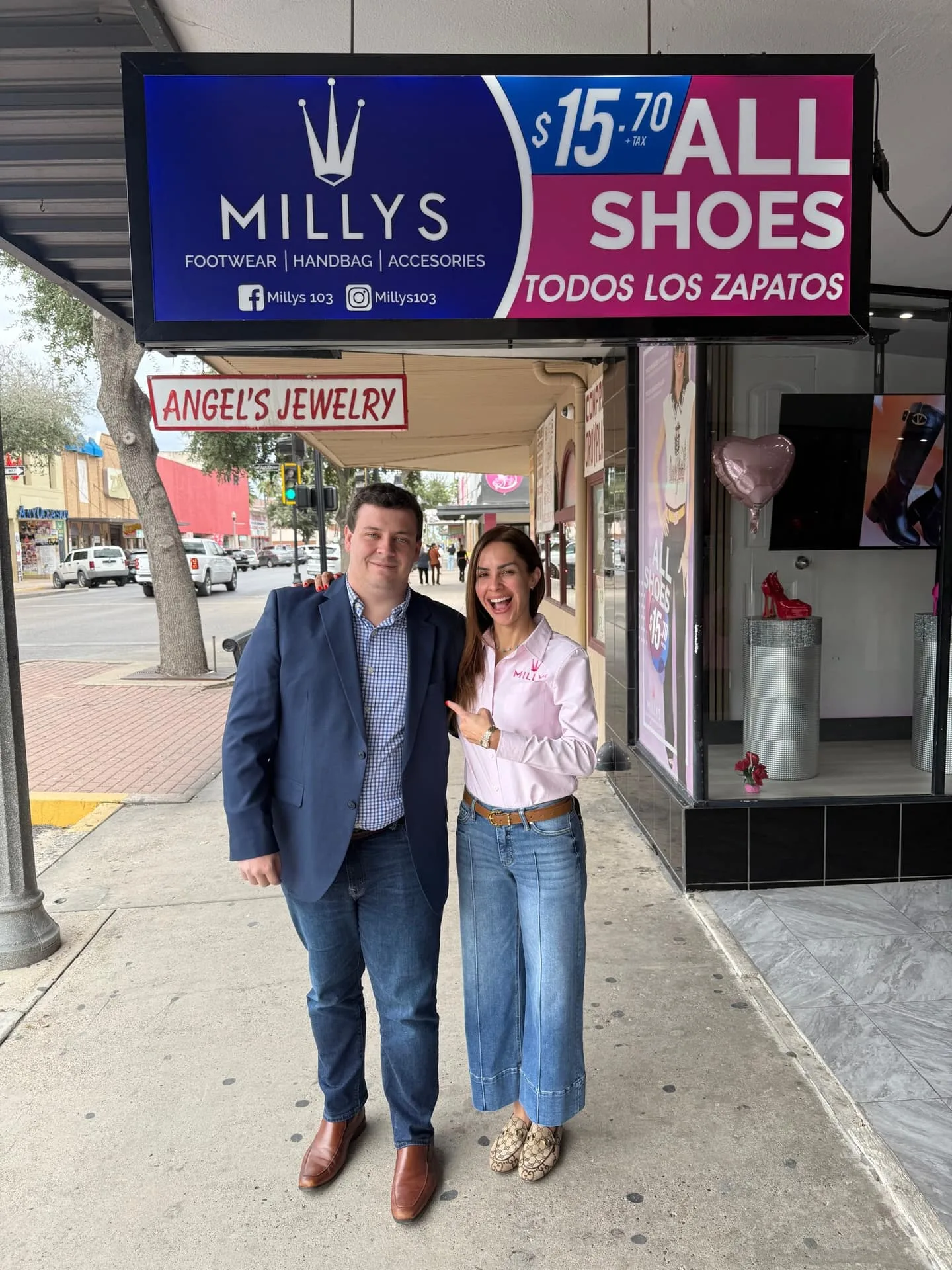
Milly’s is a women’s footwear brand rooted in the Rio Grande Valley of Texas — the kind of store a community adopts. Loyal customers, strong word-of-mouth, and a founder with more than fifteen years in fashion retail who had built the shop around a real mission: giving the women of the Valley a place to feel confident, styled, and seen. The brand had reached the moment every successful store eventually faces: the ambition to grow beyond the location that built it — including through franchising.
The obstacle wasn’t demand. It was that everything which made Milly’s work lived in the founder’s head: the buying instincts, the service standards, the day-to-day rhythms that customers experienced as “this place is different.” That kind of operating knowledge is the most valuable asset a retail concept has — and the least transferable. Franchisees can’t buy instinct. They buy systems, documentation, and economics they can underwrite. Until the implicit becomes explicit, there is nothing to sell but a name.
The work
This engagement ran on site — CMA advisors inside the store, watching the operation actually run, because you cannot document a workflow you have never observed.
Making the operating system explicit
The core workstream converted fifteen-plus years of founder instinct into a documented operating playbook covering the full store lifecycle: merchandising and buying cadence, floor standards, the customer- service rituals that drove Milly’s reputation, staffing and training rhythms, and the back-office routines that kept it all running. The test for every SOP was practical — could a capable operator who had never met the founder run a Milly’s to standard from these documents?
Unit economics and the franchise revenue model
Franchise growth lives or dies on whether the second unit’s math works without the founder’s daily presence. The engagement built the unit-economics analysis — what a location costs to open and operate, what it returns at maturity — and, just as important, defined how the franchisor itself makes money. The Milly’s franchise model runs on three revenue streams: the margin on wholesale inventory supplied to franchisees, an upfront franchise fee, and an ongoing royalty on sales. Naming those streams explicitly does two jobs at once: it gives a prospective franchisee a deal they can underwrite, and it gives the founder a clear-eyed view of where the system’s economics actually come from — inventory margin and royalty, not just fees. A territory evaluation framework rounded it out, for judging where Milly’s specific customer profile exists in enough density to support a new store.
A phased, gated expansion strategy
Expanding beyond a first location is a go-to-market problem, not just an operations one: you’re taking a concept that works in one place and deciding how, where, and how fast to bring it to new markets. Rather than a leap from one store to a franchise system, the strategy sequenced growth in stages with explicit gates: prove the documented playbook can run the flagship, validate it under a second operator, then scale — each phase designed to protect the brand and the founder’s capital from the failure mode that kills most young franchise systems, which is selling units faster than the system can support them. That staged, gated approach — enter deliberately, prove before you scale — is the same discipline behind any sound go-to-market strategy: the market is won by sequence, not by speed.
Impact
Milly’s moved from beloved store to replicable system — documented operations, a unit-economics and three-stream revenue model franchise candidates can evaluate, and an expansion strategy with phase gates instead of hope. That is the difference between selling franchises and supporting them, and it is the foundation the next chapter of a Rio Grande Valley institution — one founder’s fifteen-year mission to empower the women of the Valley — gets built on.
Franchisees can't buy instinct. They buy systems, documentation, and economics they can underwrite.
Engagement details are shared with client permission or presented in anonymized form. Results described are specific to the engagement and client circumstances shown and are not a guarantee of future outcomes. See our full disclaimer.
The Transformation
Before & after
Before
Everything that made Milly's work lived in the founder's head.
After
A documented operating playbook a new operator can run to standard.
Before
No transferable economics for a franchisee to underwrite.
After
Unit economics plus a three-stream franchise revenue model.
Before
Ambition to expand with nothing to sell but a name.
After
A territory framework and a system franchise candidates can evaluate.
Before
Exposure to the failure mode that kills young franchise systems.
After
A phased strategy with explicit gates protecting brand and capital.
The Work, In Sequence
How the engagement ran
- 1
Making the operating system explicit
Fifteen-plus years of founder instinct converted into a documented playbook covering the full store lifecycle — merchandising and buying cadence, floor standards, the service rituals customers came back for, staffing, and back-office routines.
- 2
Unit economics & the franchise revenue model
What a Milly's location costs to open and returns at maturity, plus the three-stream franchise economics — wholesale-inventory margin, an upfront franchise fee, and an ongoing royalty — so a franchisee can underwrite the deal and the franchisor can see how the system makes money.
- 3
A phased, gated expansion strategy
Growth sequenced in stages with explicit gates — prove the playbook in the flagship, validate it under a second operator, then scale — protecting the brand and the founder's capital from the over-selling that kills young franchise systems.
Related engagements
Free Starter Kit
Write the first SOP this week.
The SOP starter kit: the five things every procedure needs, a worked example you can copy, and a blank template, so what lives in your head becomes something the business can run on.
- The five parts every SOP needs
- A worked example: new client onboarding
- A blank template to copy per task
- Where to start: the 3-5 tasks that break when you are away