
Hospitality & Private Membership
The New Modern Country Club: The Numbers Behind a Members-Only Wellness Destination
The New Modern Country Club — Fort Worth, TX
- capital modeled, returning a 17.45% five-year IRR
- $12.5M
- local DFW addressable market, sized bottom-up
- $1.27B
- member ramp to a capped, waitlisted roster by Year 3
- 80 → 200
- Year-5 revenue across seven streams
- $5.35M
Situation
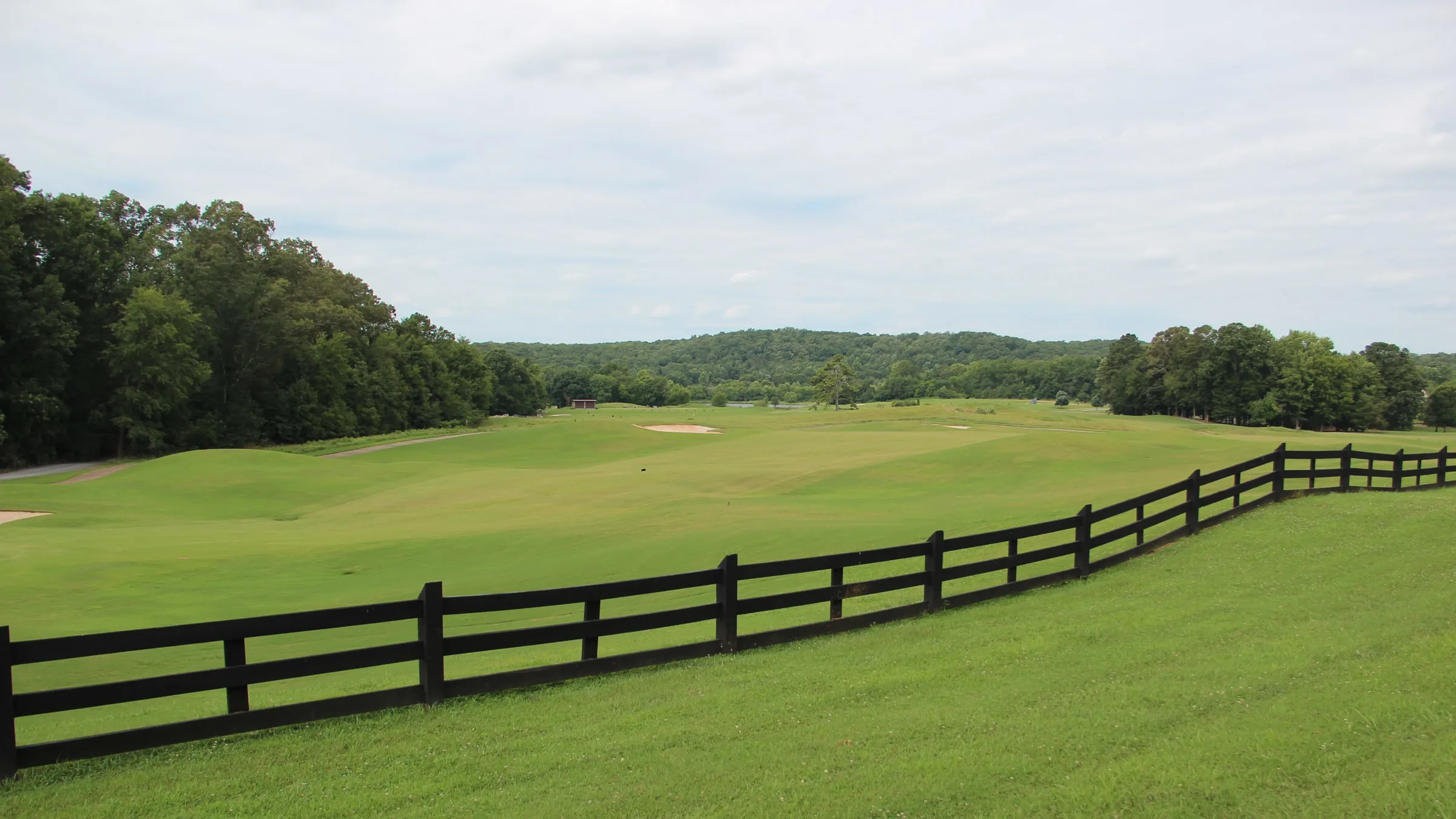
The New Modern Country Club is a members-only luxury wellness destination — a 24-acre resort-style ranch in Fort Worth combining a golf course, padel and tennis, saunas and cold plunges, a gym, a farmhouse, and farm-to-table dining under a strict, invitation-only, privacy-first model. The founder had a vivid concept and a real market instinct. What the concept lacked was the thing that turns a vision into a raise: a defensible market size and a returns story an investor can underwrite.
Private clubs are a specific kind of hard. They sell scarcity, so the business can’t be modeled like a gym chasing volume — it has to prove that the economics work at a deliberately small, capped membership. And the competitive set (established manor-estate, farmhouse, padel, and social-wellness clubs) is well-branded, so “a nicer club” is not a position. The engagement had to size the opportunity honestly and structure a club that makes money at 200 members, not 2,000.
The engagement
CMA built the market case, the business plan, the five-year financial model, the brand, and the investor deck — the full package behind a fundable private club.
Sizing the market — top-down for context, bottom-up for defensibility
The market work started wide and narrowed hard. Global wellness is a ~$1.8T market; the U.S. is roughly a
third of that ($600B), and the luxury/exclusive-club slice roughly a tenth of the U.S. ($60B). But a club in
Fort Worth doesn’t sell to the country — so the number that matters is local and bottom-up: ~76,000 DFW
high-net-worth prospects at a $16,700 blended annual value per member (a $12,500 initiation plus $4,200 in
annual dues). That funnels to a defensible obtainable slice.
A seven-stream, five-year model
A club that leans on initiation fees alone is fragile. The model was built on seven revenue streams — membership and maintenance dues, dining, event hosting, merchandise, wellness and training, and classes — so the business compounds on recurring and repeat spend, not one-time joins. Across five years, revenue scales from $2.8M to $5.35M against a controlled expense base ($1.75M → $2.55M), and the model returns a 17.45% IRR on the $12.5M investment, with ROI climbing from 8.4% to 22.7% by Year 5.
The revenue mix matters as much as the total. Even in Year 1, the club isn’t a membership business with amenities bolted on — dining matches membership dollar-for-dollar, and events, wellness, and retail add real diversification, which is exactly what makes the model durable through a soft membership year.
Membership economics built to protect the brand
The membership design is where strategy and finance meet. Pricing sits at a $12,500 initiation plus $350/month — premium, but positioned as affordable luxury against the traditional clubs the concept critiques. And the roster is capped: an 80-to-200 member ramp to a hard ceiling, then a waitlist. That cap is a financial decision as much as a brand one — it forces the model to prove profitability at 200 members and turns scarcity into a durable asset rather than a growth constraint.
Why the structure mattered
The discipline was to size locally and model for scarcity. A global-wellness headline would have flattered the deck and misled the raise; a grow-forever membership assumption would have diluted the very exclusivity the club sells. Building a bottom-up DFW funnel, a seven-stream model that works at a capped roster, and pricing that reads as attainable luxury is what made the concept legible to an investor — a scarce, defensible asset with a returns profile, not an aspiration.
Impact
The club walked into investor conversations with a complete, defensible package: a $1.27B local market sized from the ground up, a seven-stream five-year model returning a 17.45% IRR on $12.5M, and a membership structure engineered to protect the brand while the numbers scale to $5.35M in Year-5 revenue. (All figures are pro forma projections from the primary investment model, not operating results.)
The club is planned for Fort Worth. For the same work in this market, see business plans in Fort Worth and pitch decks in Fort Worth.
A private club is sold on scarcity — so the model has to prove the economics work at 200 members, not chase a thousand.
Engagement details are shared with client permission or presented in anonymized form. Results described are specific to the engagement and client circumstances shown and are not a guarantee of future outcomes. See our full disclaimer.
The Transformation
Before & after
Before
A vivid concept with no defensible market size.
After
A bottom-up DFW funnel — $1.27B TAM, $63.5M SAM, $3.17M SOM.
Before
A single membership line masquerading as a business.
After
A seven-stream, five-year model with a 17.45% IRR on $12.5M.
Before
Grow-forever ambition that would dilute the brand.
After
A capped 200-member roster with a waitlist to protect exclusivity.
Before
'Is this investable?'
After
A full investor package: plan, market case, model, brand, and deck.
The Work, In Sequence
How the engagement ran
- 1
Sizing the market from the top down, then the bottom up
From a $1.8T global wellness market down to a defensible DFW funnel: a $1.27B local TAM (76,000 HNW prospects at a $16,700 blended annual value), a $63.46M serviceable market, and a disciplined $3.17M obtainable slice.
- 2
A seven-stream, five-year model
Membership and dues, dining, events, merchandise, wellness, and classes modeled over five years — revenue scaling from $2.8M to $5.35M against a controlled expense base, returning a 17.45% IRR on the $12.5M raise.
- 3
Membership economics built to protect the brand
A $12,500 initiation plus $350/month, an 80-to-200 member ramp, and a hard cap with a waitlist — designed so the club grows into demand rather than diluting the exclusivity the concept sells.
Related engagements
Free Checklist
Are you raise-ready?
You've read the theory — now score yourself against the 12 things a lender or investor checks first. Free checklist, straight to your inbox.
- A three-statement model that holds up
- A DSCR and downside case lenders read
- An honestly sized market (TAM/SAM/SOM)
- A use of proceeds tied to milestones