
How Much Does a Business Plan Cost?
What a business plan costs to have written, what drives the price, and CMA's published prices: $3,250 for a raise of $250K to $2M, and $7,500 for $2M to $25M.
Most decks get through the first read and fall apart on the first follow-up. CMA builds the model and the market evidence first, then writes and designs the deck on top of them, so the story and the numbers are one argument.
The Outcome
A deck has one job: get to the next conversation. Everything in it either earns that or gets cut.
A deck built on a model
Every headline number traces to a driver-based financial model an investor can adjust without breaking it.
A story in the right order
Eleven slides, each answering the question an investor is asking at that point in the read.
Answers ready for the room
You know your numbers cold, and you know which slide draws the hard question before it is asked.
Who This Is For
The first money usually comes from people who already trust you. The next round comes from people who do not, and a deck that leaned on the relationship has to start earning belief slide by slide. This practice is for founders making that shift: a first raise from angels, a priced round with institutional investors, or an owner raising growth capital against a business that already works.
It is also for the founder with a deck that looks finished and keeps getting polite passes. That is rarely a design problem. It is usually a number that does not survive a question, a market sized from the top down, or an ask that does not match the plan.
If a bank or an SBA lender is part of the raise, they will want the written plan rather than a deck. See business plans and funding, or the comparison of a business plan vs. a pitch deck.
Slide by Slide
A deck works when each slide answers the question the reader has at that moment. This is the order we build to. The full method is in the investor pitch deck handbook.
Sample Slides
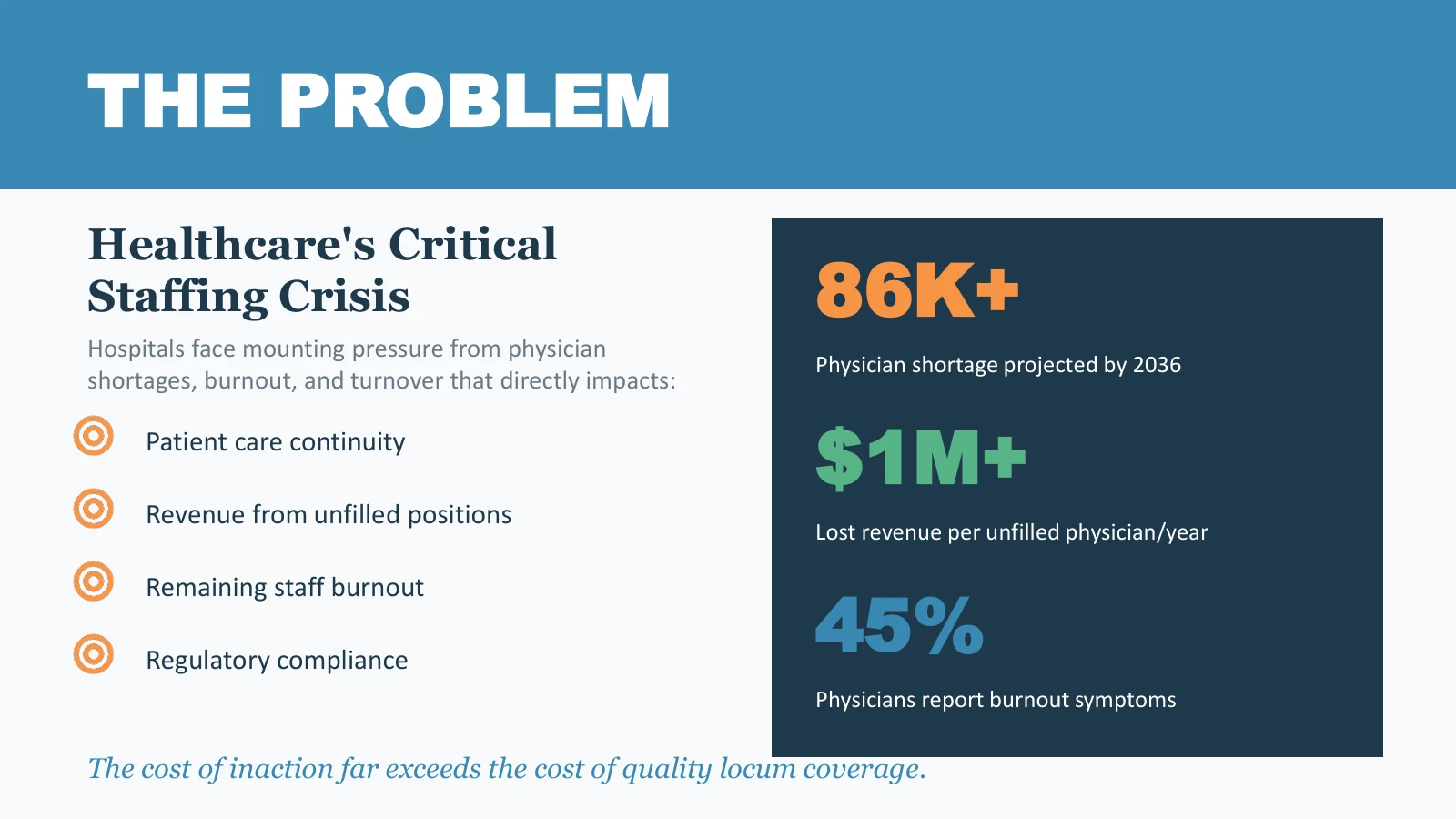
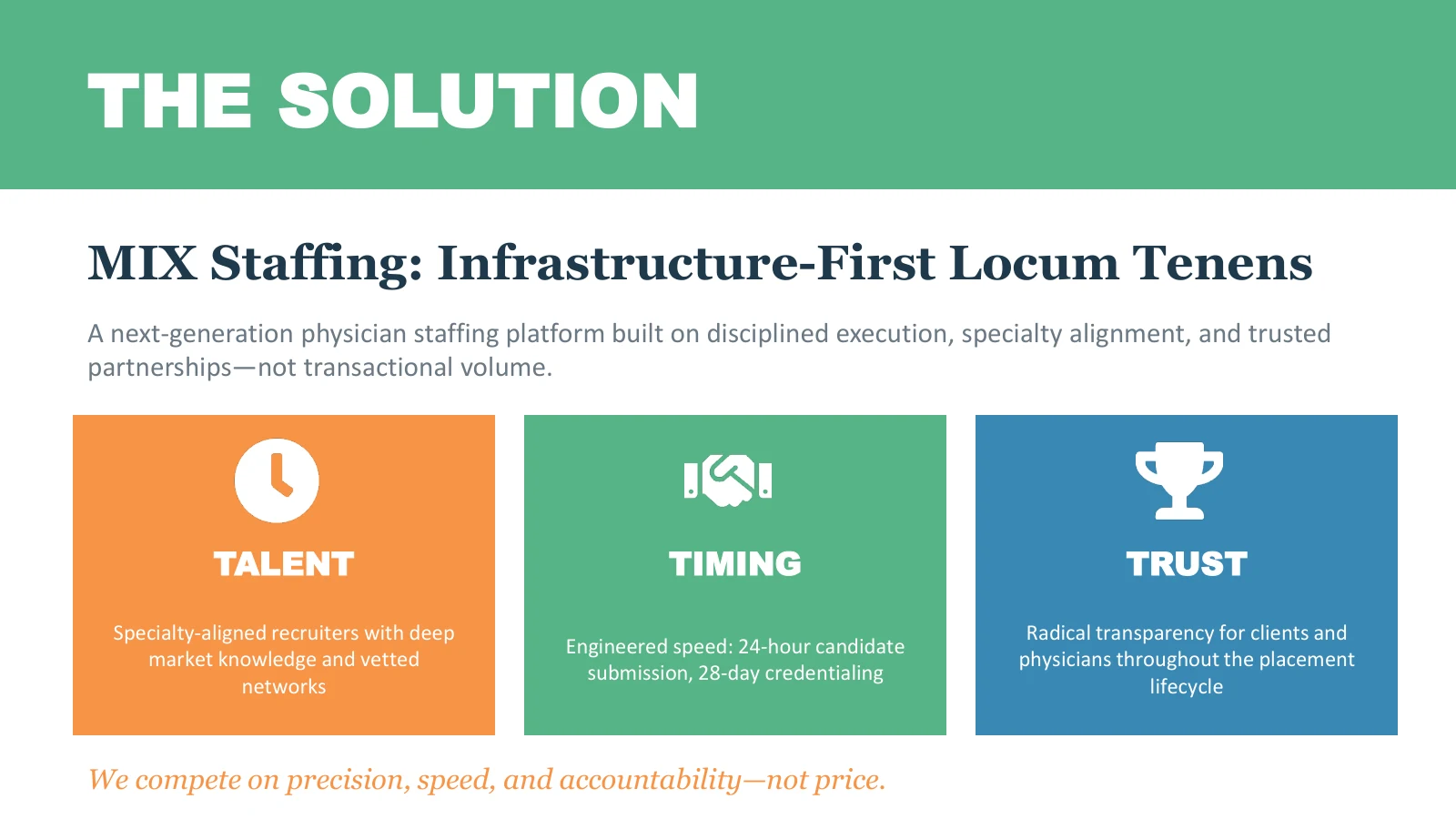
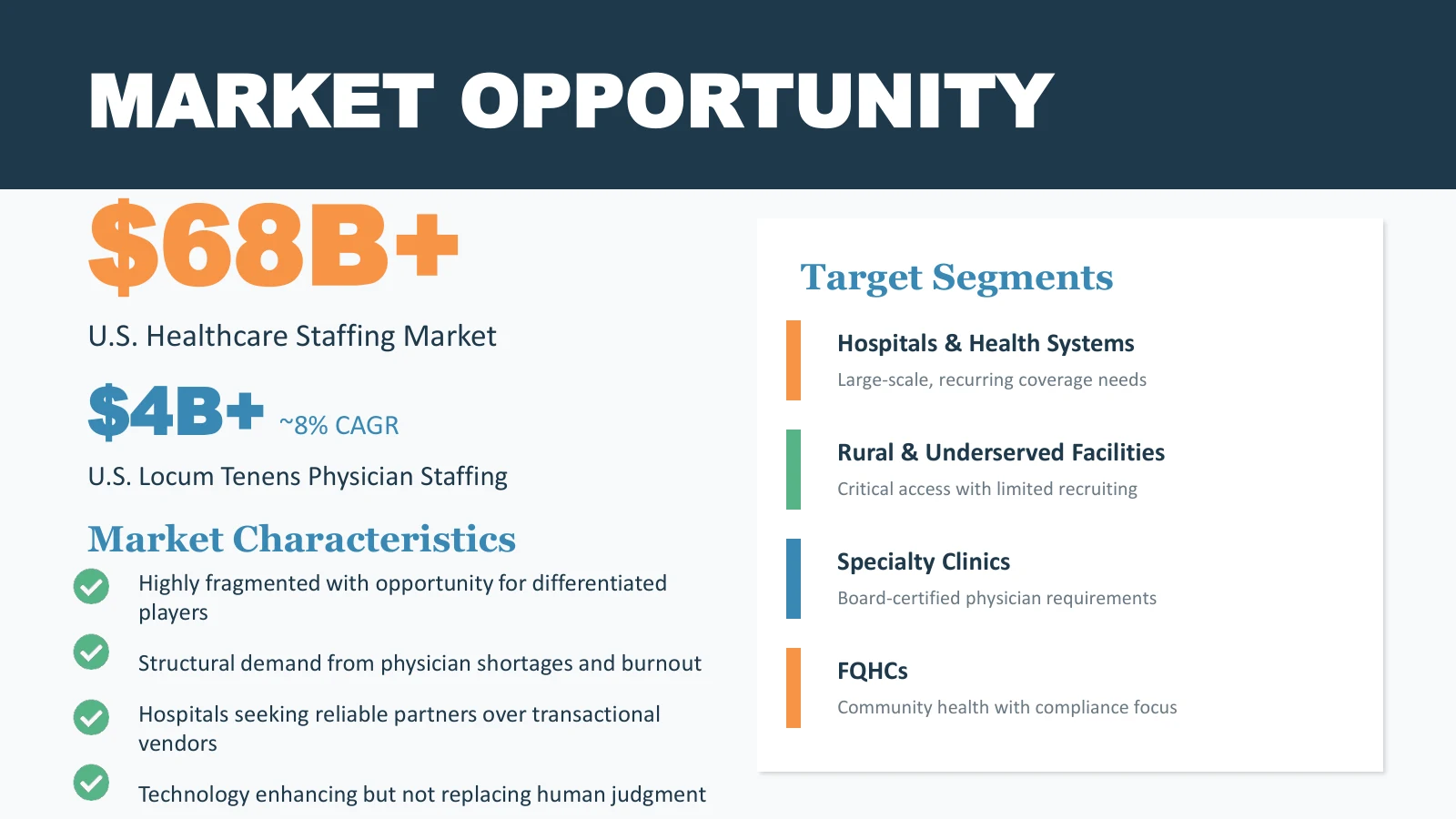
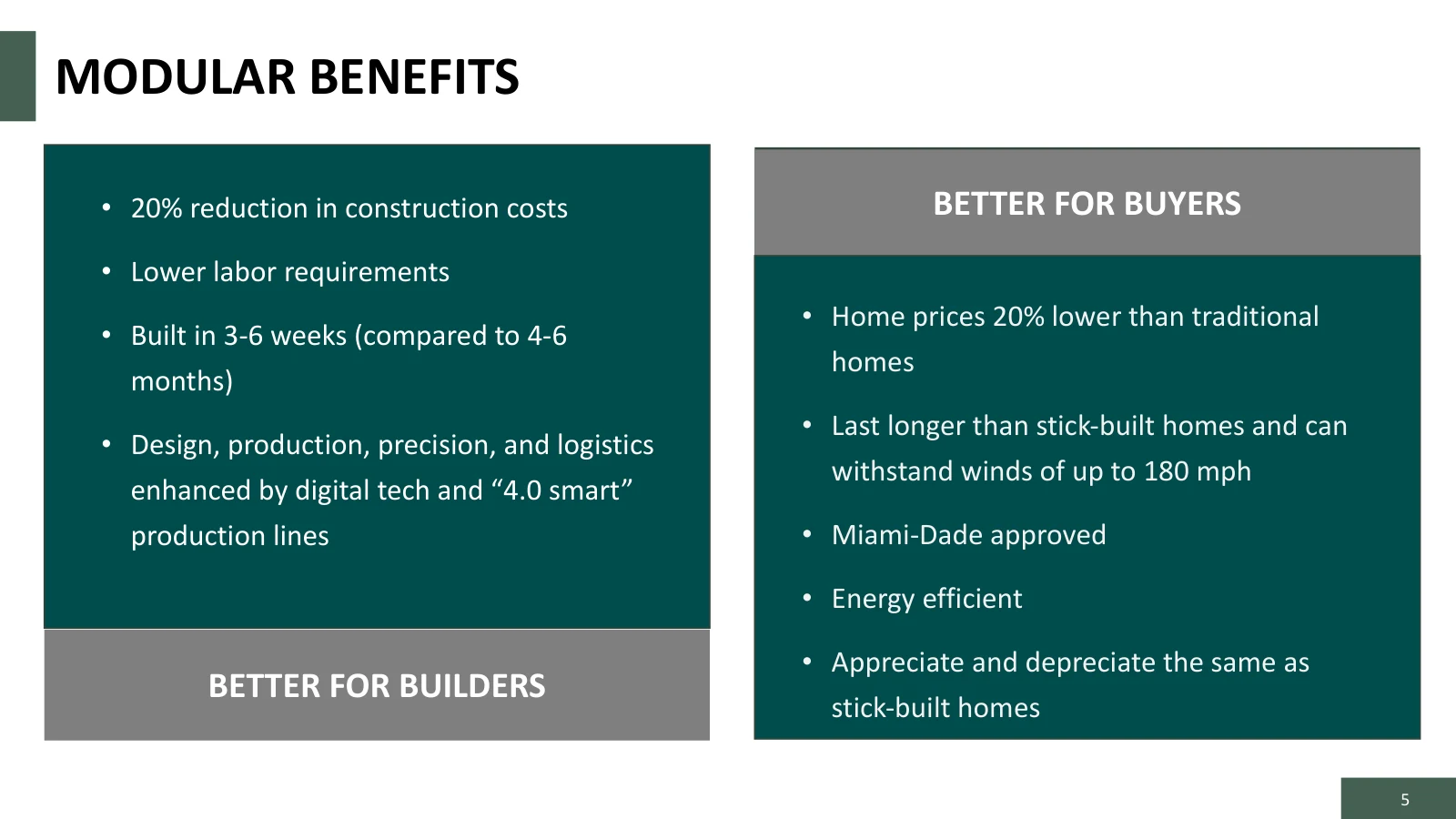
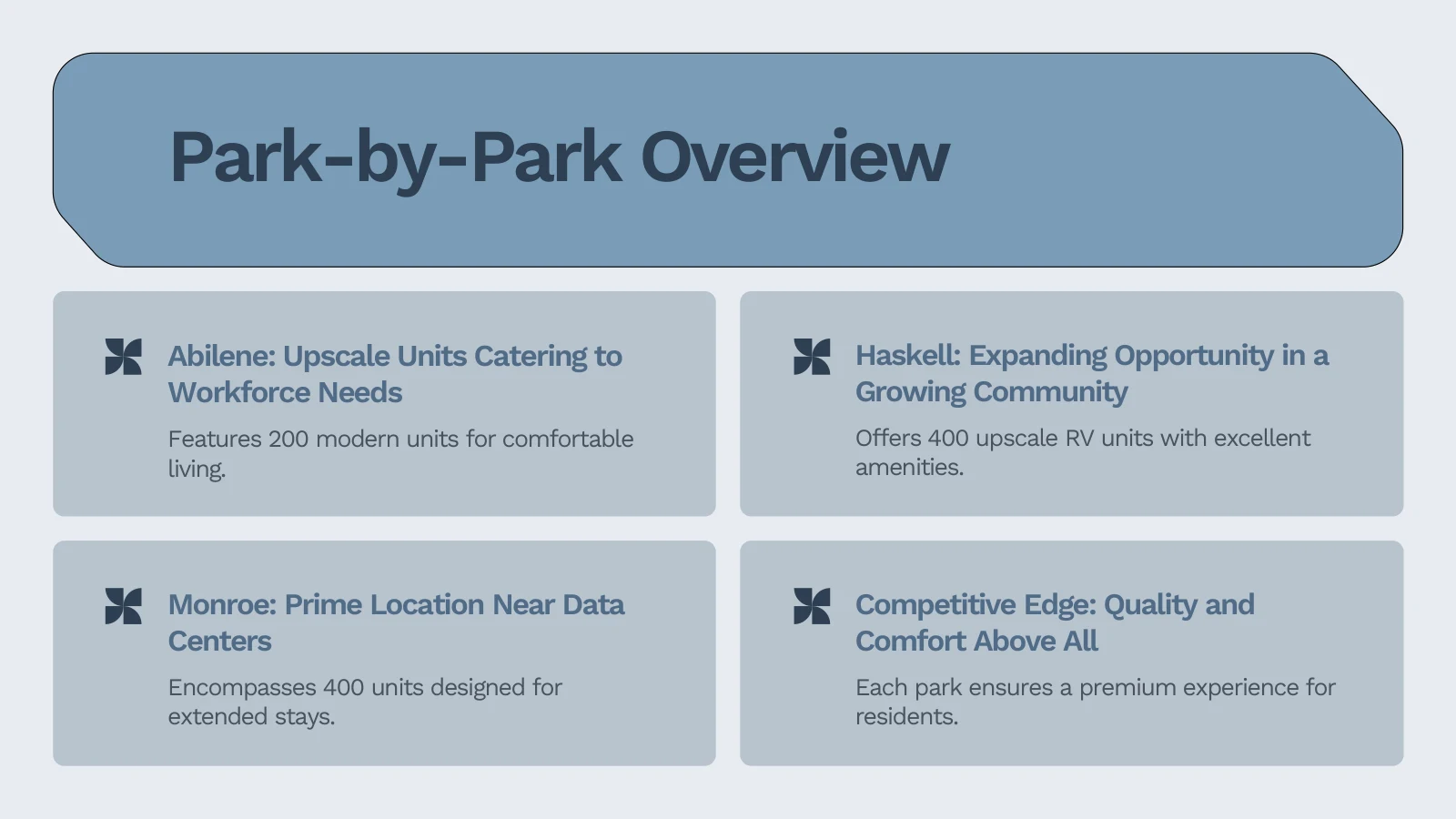
Slides from engagements with a published case study. Nothing personal is shown: no names, faces or contact details, and team, financial and ask slides are left out.
Tier 1 · $3,000
A clean, fundable narrative deck built on your numbers. This is the tier for a first raise from angels, a friends-and-family round that has to be done properly, or an owner approaching investors for the first time.
$3,000, fixed in writing before we start. The deck is built to evolve with the raise: update the traction, refine the ask, and tailor the message to each audience without rebuilding it.
Tier 2 · $5,000
For a priced round with institutional investors, where the deck is read against a large sample of good ones and the model gets interrogated. The work goes into what sits under the slides: unit economics, a sizing built from real units and prices, and a use of funds tied to milestones.
$5,000, fixed in writing before we start. If the model does not exist yet, it is scoped with the deck. See financial modeling.
Paired · Reduced
Many raises have two readers. Equity investors want the deck first. Lenders, landlords and the SBA want the written plan. Built separately, the two drift apart and diligence finds the seams. Built together, they are one argument in two formats.
When a deck is paired with a business plan engagement, it is priced below standalone. The exact number is stated on the intro call.
Proven Work
Real engagements where the deck was part of the work, with the figures each one published.

SaaS · AgTech Compliance
~$1M → $3M+projected revenue growth across the plan horizon
A venture-grade plan, model, and deck that size the opportunity and back it with numbers
Read the engagement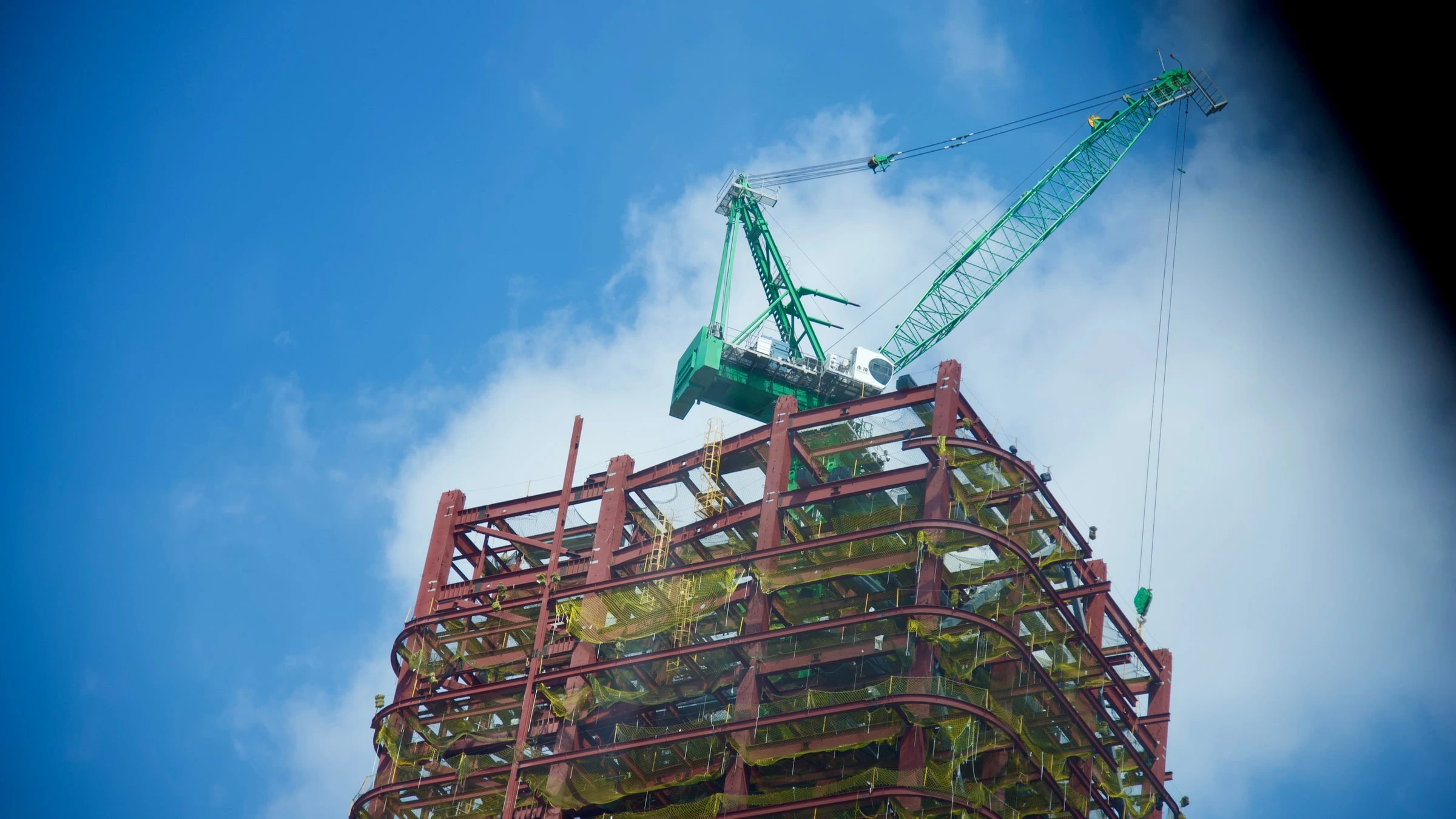
Construction & Modular Housing
$60Mequity raise to fund a robotics-driven production plant
A complete, funding-ready capital package for a steel-built housing company
Read the engagement
Food & Beverage · Restaurant
$360K+real first-year catering revenue — proven demand, not a projection
A financing-ready plan and model to convert proven catering demand into a full-service restaurant
Read the engagement
Clean-Energy Investment · Project Finance
$1.0Bof transactions completed — the track record
An institutional-grade LP pitchbook translating a tax-advantaged structure into a fundable narrative
Read the engagement
Veteran Services & Nonprofit
Two audiencesa plan written for investors and funders at once
A funder- and investor-ready plan for a veteran mental-fitness venture
Read the engagement
AI & Connected Safety Hardware
$1.5Mpre-seed SAFE sought, at a $10M valuation cap
A venture-grade, milestone-gated model for a phased hardware-and-AI platform
Read the engagementHow It Works
Thirty minutes on the raise: how much, from whom, and what they will ask. You leave with a clear scope and a fixed price.
We build or review the model and the market evidence before a slide exists, because the story has to follow from them.
The narrative is written to the eleven-slide structure and designed, with drafts you review and shape along the way.
A final deck, plus guidance for the conversations it opens: the hard questions and the honest answers.
Honest Fit
A design studio will make a better-looking deck than we will. If your figures are already solid and the deck only needs to look the part, hire the studio. Accelerators, angel groups and experienced founders will also review a deck at no cost, and that feedback is worth having before you pay anyone.
Come to us when the gap is not the feedback or the design but the model and the market work underneath. And where a raise is large enough to warrant a banked process, an investment bank or placement agent brings relationships no document can replace. We build the materials for founders approaching investors directly.
Where We Work
CMA is headquartered at 1910 Pacific Avenue in downtown Dallas. Deck work runs well on a remote working-session cadence, and in person where a room helps. Each Texas market reads a deck differently:
Related reading
What a business plan costs to have written, what drives the price, and CMA's published prices: $3,250 for a raise of $250K to $2M, and $7,500 for $2M to $25M.
A border business is often underwritten by a committee in another state. What the plan must explain: structure, currency, collateral, the slow case.

Most business loan applications fail on the documents, not the business. Here is what underwriters actually weigh, and how to be funding-ready before you apply.
FAQ
CMA publishes two tiers: $3,000 for a first raise deck and $5,000 for an investor-grade deck built for institutional investors. A deck added to a business plan engagement is priced below standalone, and the exact figure is stated on the intro call. The price is fixed in writing before work begins.
Builds the case before the slides. We start with the financial model and the market evidence, write the story that follows from them, and then design the deck, so every number on a slide can be traced to a source. A designer makes slides attractive. A consultant makes the argument underneath them hold up when an investor pushes on it.
About eleven: the hook, the problem, the solution, why now, market size, the model, traction, competition, the team, the financials, and the ask. Fewer is fine if the story holds. Detail an investor asks for later belongs in an appendix or in the business plan.
It depends on who is reading. Most equity investors want the deck first and the detail on request, so a deck plus a model is often enough. Lenders and the SBA want the written plan. If you are approaching both, the two are built from one set of numbers so they cannot contradict each other.
Both. The deck is written and designed as one piece of work. If your figures are already solid and you only need the deck to look the part, a design studio is the better hire, and we will tell you so on the call.
No. CMA builds the materials and prepares you for the questions they draw. We are a consulting firm, not a broker-dealer or placement agent, and we do not raise capital on your behalf.
Yes. Pre-revenue is when the market evidence and the unit economics matter most, because they are all an investor can evaluate. The deck has to be honest about the stage and carry the weight somewhere else: a credible wedge, evidence of demand short of revenue, and an ask that reaches a milestone someone else can check.
Free Checklist
Before a deck goes to an investor, run it against the 12 things they check first. Free checklist: score yourself before the room does.
The Full Practice
The Journal, By Email
Engagement lessons, funding math, and operations playbooks — the same analysis we publish in the Journal, delivered when it's written. No gates, no drip sequences, no selling between the lines. Unsubscribe anytime.
Thirty minutes on your raise: who you are pitching, what they will ask, and a fixed price for the deck.
Talk to the firm. Thirty minutes, no pitch — a clear read on where you stand.
Talk to the firm
Ask CMA
AI assistant · replies in seconds
Before You Go
Our Funding-Readiness Report breaks down what separates funded businesses from rejected ones — with real data, not opinions. Read it free, and we'll add our 3-statement financial-model template too.
You're all set — here are your links:
No spam, ever. Or just read the report now →