
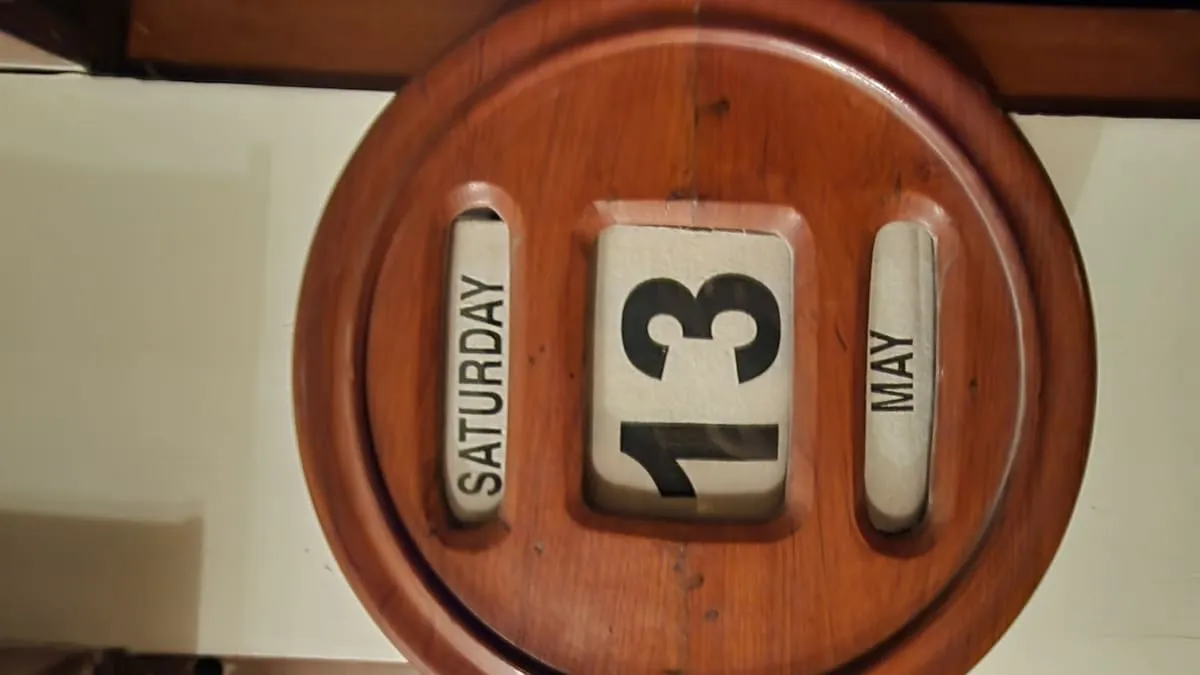
Most hosts who list a property on more than one booking platform connect the calendars once, see the dates appear on both sides, and stop thinking about it. Then, one weekend, two parties arrive at the same door.
It is tempting to treat that as bad luck. It is not. It is the predictable result of how most calendar sync works, and once you understand the mechanism, the gaps are straightforward to close.
We mentioned this briefly in property management when the software stops fitting. This piece goes into how it actually fails.
iCal sync is polling, not real time
The simplest and most common way to connect calendars is an iCal feed: each platform publishes a link to your calendar, and each other platform fetches that link to learn which dates are taken.
The key word is fetches. Nothing is pushed. Each platform checks the other’s feed on a schedule of its own choosing, and that interval is typically measured in hours rather than seconds. Between one check and the next, a date booked on one platform is still showing as available on the other.
That window is the double booking. The more popular the property, and the more last-minute its bookings, the more often two guests fall into it.
Feeds carry blocks, not bookings
The second surprise is how little a feed contains. Most iCal exports say only that a date is unavailable. They generally do not carry the guest, the price, or even whether the date is a real booking or a manual block.
That has two consequences. You cannot rely on a feed to reconcile revenue — that has to come from each platform’s own reporting, which matters when preparing an owner statement. And anything that is not a booking on a connected platform — a direct booking, an owner stay, a maintenance day — has to be blocked deliberately, everywhere, or it simply does not exist as far as the other channels are concerned.
A feed that stops working looks like no bookings
This is the failure that causes the worst weekends. A feed can stop updating for dull reasons: a link regenerated on one platform, a listing relisted, an expired connection. Nothing announces it.
And a calendar that has stopped receiving updates looks exactly like a calendar with no new bookings. There is no error on the screen. The dates are simply open.
The defense is to watch the connection, not the calendar. Know when each feed was last fetched successfully, and treat a stale fetch as an alarm. If you cannot currently see that information anywhere, you have found your largest risk, and it is worth fixing before anything else in this article.
Treat feed links as secrets
An iCal link usually works without a login. Anyone holding it can read the calendar — which means anyone holding it can see when a property is empty.
Treat those links the way you would treat a door code. Do not paste them into shared documents, email threads with contractors, or public spreadsheets. If one has been shared more widely than it should have been, regenerate it on the platform and update the connection.
Build the turnover into the calendar
Even perfect sync does not protect a same-day turnover the cleaner cannot physically make. Block buffer time where the property needs it, and do it as a rule — for example, requiring a gap night after long stays, or blocking check-in on days a turnover is already scheduled — rather than relying on someone to notice.
When iCal is not enough
For a single listing on two platforms with modest demand, iCal with monitoring is usually adequate. As listings and channels multiply, the polling window stops being tolerable, and a channel manager connected to the platforms’ own programming interfaces — which can update availability far faster than a periodic fetch — starts to earn its cost.
The platform we built for DW Capital Holdings runs iCal channel sync alongside long-term leases in the same system, because the portfolio is both. Whatever tool you use, the checks in this article still apply: know the sync interval, watch the last successful fetch, and block everything that is not a connected booking.
Check the local rules too
Several cities across Texas, including in DFW, regulate short-term rentals through registration, zoning, or occupancy taxes, and those rules have changed and been challenged in recent years. Confirm the current requirements with your city before relying on any listing, including whether registration numbers must appear on it.
If you run nightly stays alongside long-term doors and the calendars have become something you check nervously, that is squarely what our property management work is built around, and a conversation will tell you whether the fix is monitoring, a better tool, or a different setup entirely.
This commentary is provided for general informational and educational purposes only and reflects the author's analysis as of the publication date. It is not legal, tax, accounting, investment, or securities advice, and it does not create a consulting or advisory relationship. Third-party names and trademarks are the property of their respective owners. See our full disclaimer.
Related reading

Automation Consulting in Irving: Get Paid by Big Buyers
Automation consulting in Irving often starts with cash: enterprise buyers pay through procurement portals, and small vendors lose weeks to rejected invoices.
Owner Statements for Property Managers: What Owners Actually Read
What a property management owner statement needs to show, why it should be frozen once sent, and how to answer the questions before owners ask them.

Multi-Store Retail Inventory: Size Runs, Transfers, Dead Stock
Why total units is the wrong inventory number for a multi-store retailer, and how size runs, store transfers and a markdown ladder fix what it hides.